
created At: 02 Feb, 2026
Key Takeaways
-
Forex trading involves exchanging one national currency for another to profit from changes in exchange rates, operating in the largest financial market globally with approximately $7.5 trillion in daily trading volume.
-
The forex market runs 24 hours a day, 5 days a week across global time zones, making it accessible for working professionals in India who can trade during early morning or late evening hours.
-
Successful forex trading requires structured education, disciplined risk management, and a step-by-step plan—it is not a get rich quick scheme promising overnight wealth.
-
Beginners should master core concepts like pips, lots, leverage, and spreads before risking real money, ideally through 2-3 months of demo trading practice.
-
Enrolling in an online forex trading course tailored to Indian traders can significantly shorten the learning curve and provide foundational knowledge with local context.
What Is Forex (FX) Trading?
Forex trading, also known as FX trading or foreign exchange trading, is the act of buying one currency while simultaneously selling another. When you exchange Indian rupees for US dollars before an international trip, you are participating in the currency market—forex trading applies this same principle for profit.
The forex market represents the global marketplace where currencies are traded between banks, institutions, and individual investors. According to the Bank for International Settlements’ April 2022 triennial survey, daily forex turnover reached approximately $7.5 trillion, making it the largest and most liquid of all financial markets worldwide.
Currencies are always quoted in pairs because you are comparing the value of one currency against another. For example:
-
EUR/USD 1.0850 means 1 euro equals 1.0850 US dollars
-
USD/INR 83.25 means 1 US dollar equals 83.25 Indian rupees
-
GBP/JPY 188.50 means 1 British pound equals 188.50 Japanese yen
The first currency in the pair is called the base currency, and the second is the quote currency. When traders believe the base currency will strengthen against the quote currency, they “go long” (buy). When they expect it to weaken, they “go short” (sell).
Beyond speculation, forex trading serves practical purposes for international trade. Importers, exporters, multinational companies, and investors use currency trading to hedge their exposure to foreign currencies. A Mumbai-based importer paying for goods in US dollars might use forex instruments to lock in exchange rates and protect against unfavorable currency price movements.
How the Forex Market Works (Structure, Sessions and Participants)
The forex market operates differently from stock exchanges like the NSE or NYSE. There is no central exchange building where all trades happen. Instead, it functions as an over-the-counter (OTC) market where prices form electronically through a global network of banks, brokers, and trading platforms.
This decentralized structure allows the currency market to operate continuously from Monday morning in Wellington and Sydney to Friday evening in New York. For traders in India, this translates to roughly 5 a.m. IST on Monday through early Saturday morning IST—providing almost continuous access to price movement throughout the trading week.
Major Trading Sessions
The 24-hour trading cycle flows through four main sessions:
|
Session |
Key Centers |
IST Timing (Approximate) |
Characteristics |
|---|---|---|---|
|
Sydney |
Wellington, Sydney |
3:30 AM – 12:30 PM |
Lower volume, quieter start |
|
Tokyo |
Tokyo, Hong Kong, Singapore |
5:30 AM – 2:30 PM |
Active Asian pairs like USD/JPY |
|
London |
London, Frankfurt |
1:30 PM – 10:30 PM |
Highest volume, most volatile |
|
New York |
New York, Chicago |
6:30 PM – 3:30 AM |
Overlaps with London for peak activity |
The London-New York overlap (approximately 6:30 PM to 10:30 PM IST) typically sees the highest trading volume and volatility, making it a popular window for active traders worldwide.
Market Participants
The fx market includes diverse participants with different objectives:
-
Central banks (RBI, Federal Reserve, ECB) manage monetary policy and sometimes intervene in currency values
-
Commercial banks facilitate international trade and provide liquidity
-
Multinational corporations exchange currencies for business operations
-
Hedge funds and institutional traders speculate for profit
-
Retail traders access the market through online brokers using trading platforms
Currency pairs are categorized by liquidity and trading volume:
|
Category |
Examples |
Spread |
Volatility |
|---|---|---|---|
|
Majors |
EUR/USD, USD/JPY, GBP/USD |
0.1-1 pip |
Moderate |
|
Minors |
EUR/GBP, AUD/JPY, GBP/CAD |
1-3 pips |
Moderate-High |
|
Exotics |
USD/TRY, EUR/ZAR, USD/INR |
10-100+ pips |
High |
Brokers and liquidity providers offer bid-ask quotes, with the spread representing the cost to enter a trade. A 1-pip spread on EUR/USD might seem small, but it adds up for active scalpers making dozens of trades daily.

Types of Forex Trading (By Product and Style)
Beginners typically access the spot forex market through CFDs (Contracts for Difference) or direct broker platforms, but several products and trading styles exist within the broader foreign exchange market.
Product-based types include spot forex (immediate exchange at current price with T+2 settlement), forwards (custom OTC contracts for future delivery at agreed rates), futures (standardized contracts traded on regulated exchanges like CME), and options (the right but not obligation to trade at a fixed price before expiration). Most retail forex trading courses focus on spot forex and CFDs due to their accessibility.
Trading styles vary by time horizon and approach:
-
Scalping involves holding positions for seconds to minutes, chasing small gains of 5-10 pips across numerous trades during volatile sessions
-
Day trading means opening and closing all positions within the same trading day, avoiding overnight exposure and often trading around major market news
-
Swing trading holds positions for days to weeks, capturing medium-term price movement using technical analysis on 4-hour or daily charts—for example, holding EUR/USD through a European Central Bank rate decision
-
Position trading takes a longer view of weeks to months, relying heavily on fundamental analysis and macroeconomic trends
Your choice of trading style should match your available time, risk tolerance, and personality. Test different approaches in a demo account before committing real money to any particular method.
A structured forex trading course for beginners should clearly explain which products and time frames it covers, helping you select material aligned with your goals.
Core Concepts Every Beginner Must Learn
Before joining any forex trading course online, you must understand key terminology that controls your profit and loss. These concepts form the foundation for every trading decision you will make.
Pips and Pip Value
A pip (percentage in point) is the smallest standard price movement in a currency pair. For most pairs, one pip equals 0.0001 (the fourth decimal place). For pairs involving the Japanese yen, one pip equals 0.01 (the second decimal place).
Example: If EUR/USD moves from 1.1000 to 1.1005, that is a 5-pip movement.
Pip value depends on your lot size:
-
Standard lot (100,000 units): approximately $10 per pip on EUR/USD
-
Mini lot (10,000 units): approximately $1 per pip
-
Micro lot (1,000 units): approximately $0.10 per pip
-
Nano lot (100 units): approximately $0.01 per pip
Lot Sizes
Lot size determines your position size and therefore your risk exposure:
|
Lot Type |
Units |
Typical Pip Value (EUR/USD) |
|---|---|---|
|
Standard |
100,000 |
$10 |
|
Mini |
10,000 |
$1 |
|
Micro |
1,000 |
$0.10 |
|
Nano |
100 |
$0.01 |
A beginner in India with limited capital should start with micro-lot trading to keep individual trade risk manageable while learning.
Leverage and Margin
Leverage allows you to control a larger position with a smaller amount of capital. If your broker offers 1:100 leverage, you can control $10,000 worth of currency with just $100 in margin.
Example scenario: With ₹16,000 (approximately $200) and 1:50 leverage, you could control a position worth $10,000. If the trade moves 1% in your favor, you gain $100 (50% of your margin). If it moves 1% against you, you lose $100 (50% of your margin).
Leverage is a double-edged sword—it amplifies both gains and losses. Many regulatory bodies like ESMA in Europe cap retail leverage at 1:30 specifically to protect new traders from catastrophic losses.
Spreads and Trading Costs
The spread is the difference between the bid (selling) price and ask (buying) price. This represents a cost you pay on every trade.
Example: If EUR/USD shows a bid of 1.0848 and ask of 1.0850, the spread is 2 pips. On a micro lot, this costs approximately $0.20 to enter the trade—you start slightly in the negative and need the market to move in your favor just to break even.
Some brokers charge raw spreads (as low as 0.0 pips) plus a fixed commission per lot. Active scalpers care deeply about these costs since they add up quickly across many trades.
Fundamental Analysis in Forex
Fundamental analysis involves studying economic data, interest rates, and geopolitical events to judge whether a currency is likely to strengthen or weaken over coming days, weeks, or months. This approach helps traders understand the underlying forces driving currency values.
Key Economic Indicators
Several macroeconomic indicators influence major pairs and emerging market currencies like USD/INR:
-
GDP growth rates signal economic health; stronger growth typically supports currency strength
-
Inflation data (CPI releases) affects central bank policy expectations
-
Unemployment rates indicate labor market conditions
-
Trade balance figures show import/export dynamics affecting currency demand
-
Interest rate decisions from central banks directly impact currency attractiveness
When US CPI data releases higher than expected, it often signals the Federal Reserve might maintain or increase interest rates, typically strengthening the US dollar against other national currencies.
Central Bank Policy
Central bank decisions are among the most powerful drivers of currency price movements. The Federal Reserve, European Central Bank, Bank of Japan, and Reserve Bank of India set monetary policy that directly affects exchange rates.
Experienced traders track:
-
Scheduled rate decision meetings
-
Central bank official speeches
-
Policy statement language changes
-
Forward guidance on future actions
A surprise RBI rate hike could significantly move USD/INR within minutes of the announcement.
Using Economic Calendars
Every forex trader should bookmark an economic calendar showing daily and weekly scheduled releases. These calendars rate events by expected market impact (low, medium, high) and show consensus forecasts alongside previous readings.
Check your economic calendar before entering any trade. Major data releases can cause spreads to widen, slippage to increase, and prices to move 50-100+ pips within seconds—conditions that can devastate poorly planned positions.
Any best forex trading course for beginners in India should include live or recorded walkthroughs of major data releases, demonstrating how volatility and spreads behave during such events.
Technical Analysis Basics for New Traders
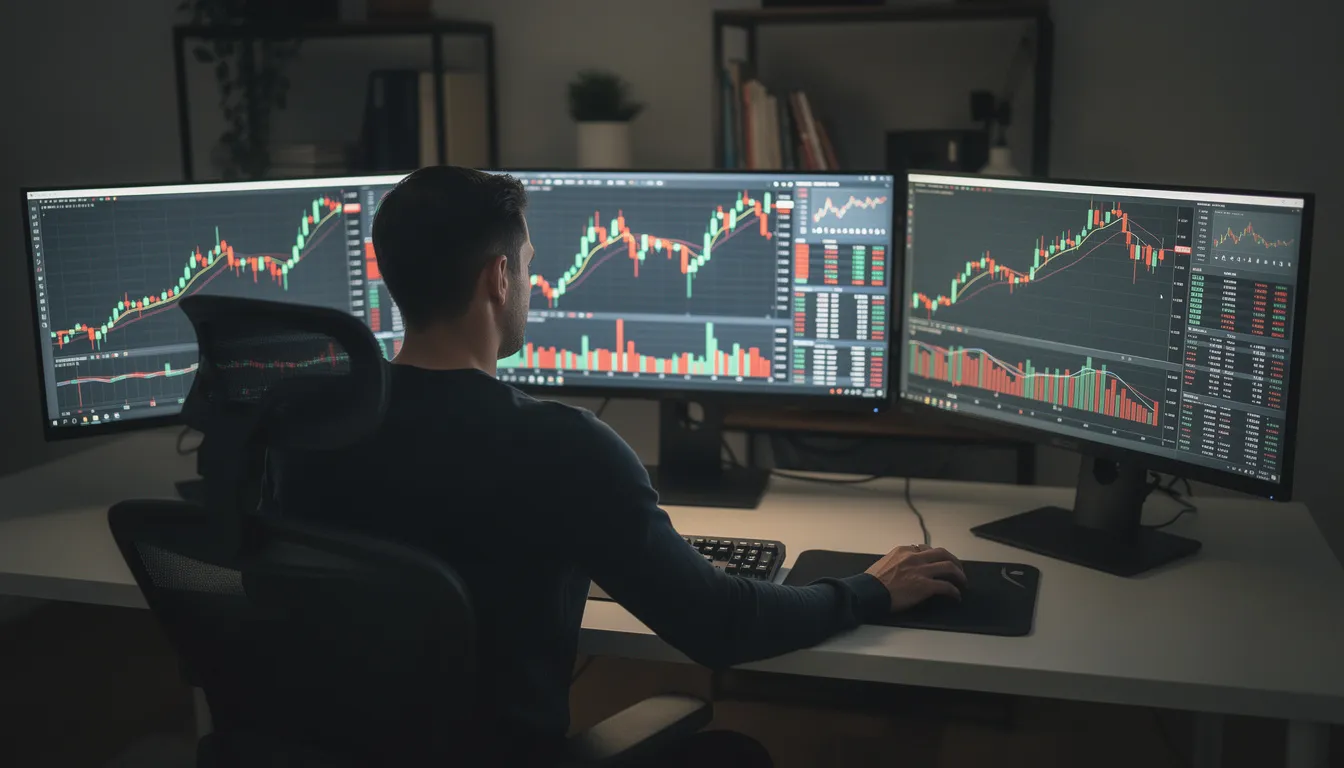
Technical analysis focuses on price charts and patterns, operating on the principle that all known information is already reflected in current prices. Technical traders believe that trends tend to continue until they reverse, and that historical price action provides clues about future movement.
Chart Types
Three main chart types serve different analytical purposes:
|
Chart Type |
Description |
Best For |
|---|---|---|
|
Line |
Connects closing prices with a single line |
Identifying general trends |
|
Bar |
Shows open, high, low, close for each period |
Detailed price action analysis |
|
Candlestick |
Visual boxes showing open-close range with wicks |
Pattern recognition, most popular |
Most experienced traders and professional traders prefer candlestick charts for their visual clarity. A green (or white) candle indicates the price closed higher than it opened, while a red (or black) candle shows the price closed lower.
Support, Resistance, and Trends
Support represents price levels where buying pressure historically prevented further decline. Resistance marks levels where selling pressure capped upward movement.
For example, if EUR/USD has bounced off the 1.0800 level three times over the past month, that becomes a recognized support zone. Traders watch for either another bounce or a breakdown below that level.
Trend lines connect successive highs (in a downtrend) or lows (in an uptrend) to visualize the direction of price movement. Markets move in three directions: up, down, or sideways.
Beginner-Friendly Indicators
While dozens of technical indicators exist, beginners should focus on a few foundational tools:
-
Moving averages (50-day, 200-day) smooth price data to reveal trend direction; a “golden cross” (50 MA crossing above 200 MA) signals bullish momentum
-
RSI (Relative Strength Index) measures overbought (above 70) and oversold (below 30) conditions
-
MACD (Moving Average Convergence Divergence) identifies momentum shifts and potential trend changes
A structured forex trading course for beginners full course should not overload students with indicators. Learning 1-2 simple systems that combine trend identification, support/resistance, and risk management produces better results than mastering twenty indicators superficially.
How Forex Trading Actually Works Step by Step
Understanding the practical workflow for placing and managing a forex trade bridges the gap between theory and action. Here is how beginners typically progress from account opening to executing trades.
Step 1: Choose a Regulated Broker
Select a broker regulated by reputable authorities (FCA, ASIC, CySEC, or similar). Verify their licensing, check client fund protection policies, and review trading costs including spreads and commissions.
Step 2: Open and Fund Your Account
Complete the registration and KYC verification process, providing identity documents as required. Fund your account via bank transfer, card, or e-wallet. Many brokers accept deposits starting from $10-100, though starting with slightly more provides better position sizing flexibility.
Step 3: Select Your Trading Platform
Most brokers offer MetaTrader 4, MetaTrader 5, or proprietary platforms. MT5 is often recommended for beginners due to its comprehensive charting tools (80+ indicators), algorithmic trading support, and widespread broker integration.
Step 4: Understand Order Types
|
Order Type |
Description |
When to Use |
|---|---|---|
|
Market Order |
Executes immediately at current price |
When you need to enter now |
|
Limit Order |
Executes only at your specified price or better |
When you want a better entry price |
|
Stop Order |
Triggers when price reaches specified level |
For breakout entries |
|
Stop Loss |
Automatically closes at loss threshold |
Essential risk management |
|
Take Profit |
Automatically closes at profit target |
Lock in gains |
Example: You believe EUR/USD will break above resistance at 1.0900. You place a buy stop order at 1.0905, a stop loss at 1.0850 (55 pips risk), and take profit at 1.1010 (105 pips target).
Step 5: Calculate Position Size
Position sizing based on account balance and risk per trade prevents single trades from devastating your capital.
Example calculation:
-
Account balance: ₹50,000 (approximately $600)
-
Risk per trade: 1% = ₹500 ($6)
-
Stop loss distance: 30 pips
-
Pip value needed: $6 ÷ 30 pips = $0.20 per pip
-
Position size: 2 micro lots (at $0.10 per pip each = $0.20)
Use a demo account for at least 1-2 months before trading live. Practice trading with virtual funds until order placement, position sizing, and basic strategy execution feel routine. A forex trading course online should include practical platform tutorials and risk-based practice exercises.
Advantages of Forex Trading for Individuals
While forex trading carries significant risk, it offers unique advantages that attract traders worldwide. Understanding these benefits helps you evaluate whether currency trading aligns with your financial goals.
High Liquidity and Tight Spreads
The massive daily trading volume of the forex market means major pairs like EUR/USD and GBP/USD enjoy exceptional liquidity. This translates to:
-
Tight spreads (often under 1 pip on majors)
-
Minimal slippage during normal market hours
-
Ability to enter and exit positions quickly
24/5 Market Access
Unlike stock markets with fixed trading hours, forex operates continuously from Monday to Friday. This flexibility benefits working professionals in India who may only have time to trade during early morning IST (Sydney/Tokyo sessions) or late evening IST (during London/New York overlap).
Controlled Leverage Potential
When used responsibly, leverage allows modest capital—₹20,000 to ₹50,000—to participate meaningfully in the market. This democratizes access compared to capital markets requiring larger minimum investments.
Low Starting Capital Requirements
Many brokers permit micro-lot trading and accept small minimum deposits ($10-100). This enables beginners to start forex trading with amounts they can afford to lose while learning.
Educational Accessibility
The availability of an online forex trading course in Hindi and English, free educational materials, and structured programs make learning more systematic than ever. Resources like ForexProGuru’s offerings help new traders build foundational knowledge without expensive trial-and-error.
Bi-Directional Profit Potential
Unlike traditional stock investing where you typically profit only when prices rise, forex traders can potentially profit from both rising and falling markets by going long or short on currency pairs.
Major Risks and Challenges in Forex Trading
Forex trading involves substantial risk, and understanding these challenges is essential before funding a live account. The same features that make forex attractive—leverage, volatility, accessibility—can also lead to rapid losses.
Market Volatility
Currency prices can move sharply on global events, economic indicators, and geopolitical events. Historical examples include:
-
GBP/USD dropped over 1,000 pips during Brexit referendum results in 2016
-
USD/CHF crashed 30% within minutes when the Swiss National Bank removed its euro peg in January 2015
-
Major pairs routinely move 50-100+ pips during high-impact news releases
Leverage Risk
A simple numeric example illustrates leverage danger: With 1:100 leverage, a $500 account controls $50,000. A mere 1% adverse move ($500) wipes out your entire account. This is why regulatory bodies increasingly restrict retail leverage.
Statistics from FCA and ESMA indicate that 70-80% of retail forex traders lose money. This is not a failure of the market itself but often reflects overleveraging, inadequate education, and poor risk management among participants.
Psychological Challenges
Trading psychology presents challenges that surprise many beginners:
-
Fear causes premature exits from winning trades
-
Greed leads to overleveraging or overtrading
-
Revenge trading follows losses with emotional, poorly planned trades
-
FOMO (fear of missing out) drives entries without proper analysis
Serious forex trading courses address trading psychology and discipline as thoroughly as they cover chart patterns.
Operational Risks
Technical and broker-related risks include:
-
Internet connection failures during open positions
-
Platform outages during volatile periods
-
Slippage around major market news
-
Choosing unregulated brokers that may not protect client funds
The Realistic Mindset
Average trader tenure before quitting is 3-6 months according to industry data. However, the top 10% of traders who survive and thrive share common characteristics: disciplined risk management rules, continuous learning, realistic expectations, and treating forex as a skill to develop over years rather than a lottery.
Risk Management Essentials for Beginners
Consistent profitability in forex depends less on predicting every price movement and more on strictly limiting losses while allowing winners to develop. Risk management separates the small percentage who survive from the majority who blow their accounts.
Position Sizing and Fixed Fractional Risk
The foundation of risk management is never risking more than a fixed percentage of your account on any single trade. Most professional traders risk 0.5-2% per trade.
Why this matters: If you risk 2% per trade and experience 10 consecutive losses (which happens), you lose approximately 18% of your account. Painful, but recoverable. If you risk 10% per trade and experience 10 losses, you lose over 65%—nearly impossible to recover from.
Stop-Loss Placement Strategies
Several approaches to placing stop losses exist:
|
Method |
Description |
Example |
|---|---|---|
|
Technical |
Beyond recent swing highs/lows |
Stop below last support level |
|
Volatility-based |
Using ATR (Average True Range) |
Stop 1.5x ATR from entry |
|
Time stops |
Exit if trade doesn’t work within timeframe |
Close if no progress in 24 hours |
Never move your stop loss further away from entry to avoid a loss. This single habit destroys more accounts than almost any other mistake.
Risk-to-Reward Ratio
Risk-to-reward ratio compares potential loss to potential gain. If you risk 20 pips to target 40 pips, your R:R is 1:2.
The math advantage: With a 1:2 R:R, you can be wrong 60% of the time and still break even. With a 1:3 R:R, you can be wrong 70% of the time. Maintaining average R:R above 1:1 creates a statistical edge even with modest win rates.
Correlation and Diversification
Opening multiple positions that depend on the same currency concentrates risk. If you are long EUR/USD, long GBP/USD, and short USD/CHF simultaneously, you essentially have triple exposure to US dollar weakness. Monitor your aggregate exposure across pairs.
A beginner to intermediate forex trading course should include risk-planning templates, money management spreadsheets, and case studies comparing disciplined versus undisciplined trading behavior.
Choosing the Best Forex Trading Course for Beginners
Structured education dramatically reduces the time and cost of trial-and-error learning. However, not all forex trading courses deliver equal value or honest information. Knowing what to look for protects your investment in education.
Key Selection Criteria
When evaluating any forex trading course, check for:
-
Clear curriculum progression from basics (pips, lots, pairs) through strategy development and market analysis
-
Practical chart examples demonstrating concepts on real historical data
-
Strong risk management coverage including position sizing, stop-loss strategies, and trading psychology
-
Transparent content description showing video hours, quizzes, community access, and support options
-
Updated material reflecting current market conditions and modern trading platforms
Language Accessibility
For learners more comfortable in regional languages, a forex trading course in Hindi offers significant advantages. Concepts explained in your native language often register more deeply than struggling through English-only material. Bilingual courses serving both Hindi and English speakers reach the broadest Indian audience.
Red Flags to Avoid
Be cautious of courses that:
-
Promise guaranteed monthly returns or risk-free profits
-
Show only winning trades without discussing losses
-
Lack any risk disclaimers
-
Feature testimonials without verifiable details
-
Push high-pressure sales tactics
Legitimate courses acknowledge that trading involves risk and that results depend on individual effort, discipline, and market conditions.
Evaluating Value
Compare the cost of a course against self-learning alternatives. Free resources exist but are scattered, often inconsistent, and may skip critical topics like risk management and trading psychology. A well-structured forex trading course online offers a curated path that can shorten the learning curve significantly.
Overview of ForexProGuru’s Online Forex Trading Courses
ForexProGuru provides structured education designed specifically for beginners and intermediate traders seeking to learn forex trading systematically. This section outlines what the program offers to help you decide if it matches your learning goals.
Beginner-Focused Foundation
The online forex trading course covers essential groundwork:
-
Market basics and terminology explained clearly
-
Trading platform setup and navigation
-
Understanding currency pairs and price quotes
-
First simple strategies with chart examples
-
Introduction to risk management principles
Progression to Intermediate Skills
For those ready to advance, the beginner to intermediate forex trading course builds on fundamentals with:
-
Deeper strategy development using technical analysis and fundamental analysis
-
Live or recorded trade breakdowns showing entry, management, and exit decisions
-
Expanded risk management modules including position sizing calculators
-
Multi-timeframe analysis techniques
-
Trading psychology frameworks
Indian Context Integration
The curriculum addresses local considerations relevant to Indian learners:
-
Typical account sizes in rupees and conversion to lot sizes
-
Popular brokers accessible to Indian residents
-
IST-based session timing for practical scheduling
-
Common regulatory questions regarding RBI and SEBI guidelines
Flexible Learning Format
Courses are accessible online from anywhere in India, supporting self-paced study. Materials typically include video lectures, downloadable resources, quizzes for knowledge checks, and community or mentor support for questions when you get stuck.
How to Start Learning Forex Trading (A Practical Roadmap)
This actionable roadmap takes absolute beginners from zero knowledge to placing well-planned first live trades. Following these steps systematically builds practical skills while protecting your capital.
Step 1: Education (Weeks 1-4)
Dedicate your first month to absorbing foundational knowledge:
-
Read beginner guides covering market structure, terminology, and basic concepts
-
Watch introductory videos explaining how trades work
-
Enroll in a structured forex trading course for beginners to get organized, comprehensive coverage
-
Take notes and create flashcards for key terms
Milestone: You can explain pips, lots, leverage, and spreads to someone else without hesitation.
Step 2: Demo Trading (Months 2-3)
Open a demo account and practice trading with virtual funds:
-
Execute all order types until the process feels automatic
-
Practice position sizing calculations based on percentage risk
-
Test one or two simple strategies without worrying about profits
-
Make mistakes in a consequence-free environment
Milestone: You complete 50+ demo trades with consistent position sizing and stop-loss discipline.
Step 3: Strategy Development (Month 3-4)
Focus your approach rather than trying everything:
-
Choose one time frame (daily or 4-hour charts work well for beginners)
-
Select one trading style (swing trading suits most part-time traders)
-
Keep a trading journal recording every trade: entry, exit, reasoning, and post-trade review
-
Identify what works and what doesn’t based on your own pace and data
Milestone: You have a written trading plan with specific rules for entry, exit, and risk.
Step 4: Small Live Account (Month 4+)
Transition to real money with appropriate caution:
-
Fund with truly risk capital—money you can afford to lose entirely
-
Trade micro or nano lots to minimize per-trade exposure
-
Apply the same risk rules developed during demo trading
-
Accept that emotions will feel different with real money on the line
Milestone: You complete your first trade following your plan, regardless of outcome.
Step 5: Continuous Improvement (Ongoing)
Treat trading as an evolving skill:
-
Conduct weekly and monthly reviews of your statistics
-
Track win rate, average risk-to-reward, maximum drawdown, and strategy adherence
-
Refine rules based on data patterns, not emotional reactions
-
Consider advanced courses as your thorough understanding deepens

Local Considerations for Indian Forex Learners
Readers in India face specific regulatory, tax, and practical considerations when approaching forex trading. Understanding these factors helps you navigate the landscape responsibly.
Regulatory Framework
Indian residents are subject to Reserve Bank of India (RBI) and Securities and Exchange Board of India (SEBI) guidelines. At the time of writing, certain forex products and currency pairs are permitted through regulated Indian exchanges and brokers, while others require overseas broker accounts. Stay informed about current regulations, as rules evolve.
This article provides general educational information, not legal or regulatory advice. Verify current requirements through official RBI and SEBI resources or consult a qualified professional.
Practical Account Considerations
Several practical aspects affect Indian traders:
-
Funding accounts: Many international brokers accept INR deposits, which are converted to USD or EUR as the base account currency
-
Position sizing: Convert your rupee risk amount to account currency when calculating lot sizes
-
Withdrawals: Understand transfer timelines and potential bank charges
-
Record-keeping: Maintain detailed trade logs for compliance and tax purposes
Tax Treatment
Forex trading profits and losses may be treated as business income or capital gains depending on circumstances and frequency of trading. Tax rules can be complex and change over time. Consult a qualified tax professional for up-to-date guidance specific to your situation, and maintain proper records throughout your trading journey.
Localized Education Benefits
An online forex trading course in Hindi and English tailored to Indian traders explains these regulatory and practical points with current examples. Local context coverage saves you from piecing together scattered international resources that may not apply to your situation.
Building a Long-Term Forex Trading Plan
Success in forex comes from having a structured plan rather than randomly jumping in and out of trades based on emotions, social media tips, or forex robots promising automated wealth.
Define Clear Goals
Set realistic objectives focused on skill development rather than immediate large profits. Consider goals like:
-
“Become consistently profitable on demo by month 6”
-
“Limit maximum monthly drawdown to 5%”
-
“Complete 100 trades following my system before evaluating performance”
-
“Finish an intermediate course within 3 months”
Document Your Trading Plan
A written plan removes discretionary decision-making during emotional moments. Include:
|
Element |
Your Decision |
|---|---|
|
Currency pairs traded |
(e.g., EUR/USD, GBP/USD, USD/JPY) |
|
Time frames |
(e.g., 4-hour chart, daily chart) |
|
Entry rules |
(specific criteria required) |
|
Exit rules |
(stop-loss and take-profit methodology) |
|
Risk per trade |
(e.g., 1% of account) |
|
Maximum daily/weekly loss |
(e.g., stop after 3% daily loss) |
|
Review schedule |
(e.g., Sunday evening weekly review) |
Integrate Education Milestones
Build learning into your plan:
-
Complete specific modules of a forex trading course online
-
Apply each module’s concepts in demo or small live environment
-
Review extensive resources on weak areas identified in your journal
-
Progress from foundational knowledge to advanced strategies systematically
Ensure Lifestyle Fit
Your trading approach must fit your actual life:
-
What hours can you realistically dedicate given job and family commitments?
-
Which global sessions overlap with your available time in IST?
-
Can you check markets at consistent times, or will your schedule vary?
-
Is your style compatible with your sleep patterns?
Part-time traders often find swing trading on higher time frames more sustainable than scalping, which demands constant screen time.
FAQs about Forex Trading Courses and Getting Started
These frequently asked questions address common beginner concerns not fully covered in the main article and help clarify practical next steps.
How long does it take a beginner to learn forex trading well enough to trade live?
Timelines vary based on dedication and learning approach, but a motivated beginner typically needs 2-3 months of structured study combined with 1-2 months of focused demo trading before responsibly risking real money. This totals 3-5 months for most new traders to develop basic competence.
However, “learning” forex trading never truly ends. Even after going live, traders continue studying forex trading strategies, refining risk management, and developing stronger trading psychology. Rushing into live trading within days or weeks dramatically increases the probability of avoidable early losses that damage both capital and confidence.
Is a paid forex trading course necessary, or can I learn everything for free?
It is technically possible to learn forex trading from free articles, YouTube videos, and forum discussions. However, free information is scattered across countless sources, often inconsistent in quality, and may skip critical topics like risk management and trading psychology.
A well-structured forex trading course online offers a curated path with organized progression, practical exercises, and consistent methodology. This can significantly shorten your learning curve and reduce confusion from conflicting advice. Many successful traders blend free resources for supplementary learning with a structured paid course for core education—especially beneficial for those wanting clear guidance from beginner to intermediate level.
What should I check before enrolling in an online forex trading course in Hindi or English?
Before enrolling, review several key elements:
-
Syllabus coverage: Does it include market basics, technical analysis, fundamental analysis, risk management, trading psychology, and real chart examples?
-
Sample content: Can you preview lessons to assess teaching quality and language clarity?
-
Currency of material: Is content updated for current market conditions and modern trading platforms?
-
Support options: Does the course offer Q&A sessions, community groups, or email support for when you get stuck?
-
Realistic claims: Does it acknowledge trading risks, or does it promise guaranteed returns?
Online courses claiming you can get rich quick should be avoided. Legitimate education acknowledges that market participants face real risk and success requires effort.
Can I trade forex part-time while working a full-time job in India?
Many successful traders began part-time while maintaining regular employment. The key is choosing a compatible approach:
-
Time frames: Focus on 4-hour or daily charts that don’t require constant monitoring during Indian working hours
-
Scheduled check-ins: Review markets at consistent times—early morning IST (Asian session) and late evening IST (London-New York overlap)
-
Risk discipline: Keep risk per trade low and avoid overleveraging when you cannot monitor positions continuously
Part-time trading requires accepting that you will miss some opportunities. This is acceptable—protecting capital and maintaining balance matters more than catching every move.
How do I know if I am ready to move from demo trading to live trading?
Readiness for live trading involves several checkpoints:
-
Written trading plan: You have documented rules for entries, exits, and risk management
-
Demonstrated discipline: At least 1-2 months of demo results showing you follow your rules (consistency matters more than raw profits)
-
Platform proficiency: You can place, modify, and close orders confidently under different market conditions
-
Emotional preparation: You handle demo losses without overreaction and don’t abandon your plan after a few bad trades
Start live trading with a small account and micro-lot sizes. The transition from paper trading to real money brings new psychological pressures—your first trade with real capital will feel different even if you’ve done everything right in demo. Small positions ease this transition while protecting your overall capital.
Forex trading rewards those who approach it as a skill to develop over months and years, not a lottery ticket promising instant wealth. The learning experience requires patience, discipline, and structured education.
Your first step is committing to proper education before risking capital. Explore ForexProGuru’s online forex trading course to build foundational knowledge with Indian market context, or advance your skills with the beginner to intermediate forex trading course for deeper strategy development.
Start with demo trading, develop your written plan, and approach the forex market with realistic expectations. The traders who succeed are those who treat this as a long-term forex journey rather than a sprint toward quick profits.